Invisible and Undertreated: How the Medical System Fails Women With Neuropathic Pain — and What You Can Do About It
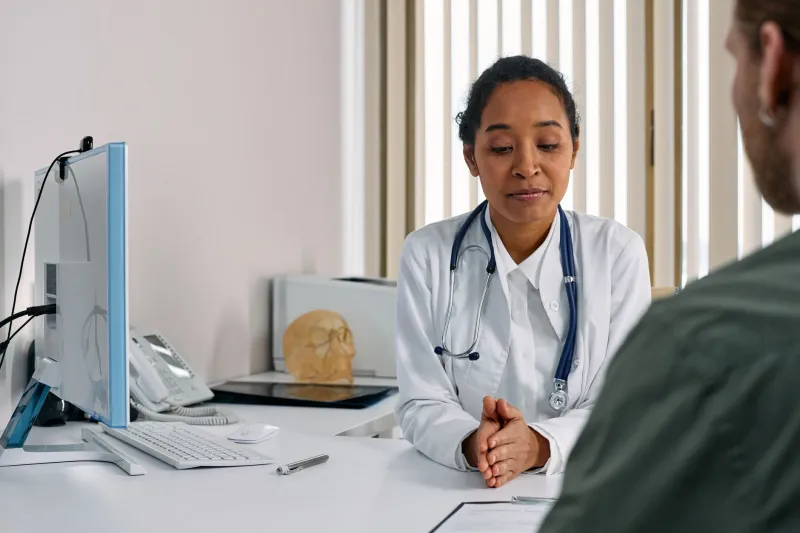
Imagine describing a burning, electric sensation that travels from your lower back through your legs — pain that disrupts your sleep, limits your mobility, and makes ordinary tasks feel insurmountable — only to be told that stress is probably the culprit and that you might benefit from relaxation techniques. For a significant number of American women with neuropathic pain, this scenario is not a hypothetical. It is a lived experience that has been repeated across clinical settings, documented in research, and confirmed by patient advocacy organizations for decades.
The gender gap in neuropathic pain care is not a matter of anecdote. It is a measurable, systemic phenomenon with biological underpinnings, institutional causes, and real consequences for the health and quality of life of millions of women. Naming it clearly — and understanding its dimensions — is essential groundwork for anyone who intends to do something about it.
The Data Behind the Disparity
The evidence of sex-based inequity in pain management is substantial and spans multiple decades of research. A landmark study published in the Journal of Pain Research found that women with equivalent pain severity scores to male patients were less likely to receive opioid prescriptions and more likely to be offered sedatives or psychotropic medications — a pattern that reflects a persistent clinical tendency to reframe women's physical pain as emotional distress.
In the specific context of neuropathic pain, the disparities are compounded by the fact that several conditions that predominantly or disproportionately affect women — including fibromyalgia, complex regional pain syndrome (CRPS), and trigeminal neuralgia — have historically been regarded with clinical skepticism. These conditions lack the kind of straightforward tissue-damage pathology that traditional medical training emphasized, and they were, for many years, dismissed as psychosomatic in ways that conditions affecting predominantly male populations were not.
The diagnostic delay data is particularly striking. Research consistently shows that women wait longer than men to receive a diagnosis for the same pain conditions — sometimes by years. Each year of diagnostic delay represents a year of undertreated pain, potential disease progression, and the compounding psychological toll of being disbelieved.
How Hormones Shape the Neuropathic Pain Experience
Beyond institutional bias, there are genuine biological factors that make the female experience of neuropathic pain distinct — and that the current standard of care frequently fails to account for.
Estrogen and progesterone have direct effects on pain sensitivity and nerve function. Research has established that estrogen modulates the expression of receptors involved in pain signaling, which means that hormonal fluctuations across the menstrual cycle, pregnancy, perimenopause, and menopause can meaningfully affect the severity and character of neuropathic symptoms.
Many women with conditions like diabetic peripheral neuropathy or postherpetic neuralgia report significant worsening of symptoms during the premenstrual phase and during perimenopause — observations that have been corroborated by clinical studies but that are rarely incorporated into individualized treatment plans. A pain management protocol designed without any acknowledgment of hormonal variability is, for many female patients, a protocol designed around someone else's physiology.
The implications extend to medication efficacy as well. Emerging pharmacogenomic research suggests that hormonal context may influence how patients metabolize and respond to medications including pregabalin. Women in certain hormonal states may require adjusted dosing strategies to achieve equivalent therapeutic effect — a nuance that the current one-size-fits-all prescribing model does not consistently address.
The Credibility Gap in Clinical Encounters
Research in medical communication has consistently found that women's pain reports are rated as less credible and less severe by clinicians — including female clinicians — than equivalent reports from male patients. This is not primarily a product of individual prejudice. It reflects the cumulative influence of medical training that historically used male physiology as the default, clinical decision-support tools built on research populations that underrepresented women, and cultural narratives that associate femininity with emotional volatility.
The practical effect is that women seeking care for neuropathic pain are more likely to be asked about their emotional state before their physical symptoms are thoroughly investigated, more likely to have their pain attributed to anxiety or depression as a primary diagnosis rather than a comorbidity, and less likely to be referred to a specialist at the same stage of symptom severity as male patients.
For women who belong to additional marginalized groups — particularly Black women, whose pain has been documented to be systematically underestimated at even higher rates — the disparity is further amplified.
What Gender-Informed Pain Management Actually Looks Like
A growing number of pain specialists and academic medical centers are beginning to operationalize the concept of sex-informed pain care. In practice, this means:
- Incorporating hormonal history and current hormonal status into the pain assessment process
- Tracking symptom fluctuations across the menstrual cycle or hormonal transition periods as clinically relevant data
- Adjusting treatment protocols during perimenopause and menopause, when neurological symptom profiles frequently shift
- Applying research that has specifically examined medication efficacy in female populations rather than extrapolating from predominantly male trial data
This is not alternative medicine. It is the application of established biological science to clinical practice — science that the medical establishment has been slow to integrate, but that forward-thinking providers are increasingly adopting.
Practical Strategies for Getting Heard
Acknowledging the existence of systemic bias does not mean accepting it as immutable. There are concrete steps that women with neuropathic pain can take to improve the quality of their clinical encounters and advocate effectively for appropriate care.
Document everything, specifically. Vague pain complaints are more easily dismissed than precise, quantified ones. Keep a detailed pain diary that records intensity on a consistent scale, location, character (burning, stabbing, electric), duration, and functional impact. Note any correlation with hormonal events. This level of documentation transforms a subjective complaint into a clinical dataset.
Name the pattern explicitly. If your symptoms worsen predictably at certain points in your cycle or have escalated since entering perimenopause, say so directly. Do not assume your provider will make this connection independently.
Request referrals without apology. If your primary care provider is not adequately addressing your neuropathic pain, asking for a referral to a neurologist or pain specialist is not an aggressive act — it is a standard and appropriate use of the healthcare system.
Bring a prepared question list. Research consistently shows that patients who arrive at appointments with written questions receive more complete information and are less likely to leave without their concerns addressed.
Consider patient advocacy resources. Organizations including the American Chronic Pain Association and the National Fibromyalgia & Chronic Pain Association offer resources specifically designed to help patients navigate clinical encounters and understand their rights.
The Broader Policy Dimension
Individual advocacy matters. But the gender gap in neuropathic pain care will not close entirely through individual action. It requires structural change: research funding that mandates sex-disaggregated data analysis, medical education that explicitly addresses bias in pain assessment, and clinical guidelines that incorporate hormonal variability as a standard consideration rather than an afterthought.
The National Institutes of Health's 2016 policy requiring the inclusion of female subjects in preclinical research was a meaningful step. Its full impact is still working its way through the research pipeline. In the meantime, women with neuropathic pain are navigating a system that was not fully designed with them in mind.
Knowing that — and knowing the specific ways in which that system tends to fall short — is not a reason for cynicism. It is a reason to be prepared, specific, and persistent in seeking the standard of care that every patient, regardless of sex, is entitled to receive.