Left Behind by the System: How Rural Americans Are Losing the Battle Against Undiagnosed Nerve Pain
Somewhere in rural Appalachia, a retired schoolteacher has been describing a persistent burning sensation in her feet to her primary care physician for the better part of three years. She has been told it is likely circulation-related, possibly a side effect of aging, and perhaps something she should simply learn to manage. What she has not been told—because no one with the relevant expertise has evaluated her—is that she almost certainly has peripheral neuropathy, a condition affecting an estimated 20 million Americans and one that responds meaningfully to targeted pharmacological treatment.
Her story is not exceptional. It is, in fact, representative of a quiet crisis unfolding in communities across the American heartland, the rural South, the mountain West, and anywhere else that sits beyond convenient reach of a major medical center.
The Geography of Neglect
Neuropathic pain—nerve pain arising from damage or dysfunction within the nervous system—is notoriously difficult to diagnose even under ideal clinical conditions. It presents differently across patients, frequently mimics other conditions, and requires a level of diagnostic nuance that many overstretched primary care providers, through no fault of their own, are not routinely trained to apply.
Now layer onto that diagnostic complexity the realities of rural healthcare infrastructure. According to data from the Health Resources and Services Administration, more than 60 million Americans live in areas designated as Health Professional Shortage Areas. Neurologists, pain management specialists, and even internists with chronic pain expertise are disproportionately concentrated in metropolitan regions. In many rural counties, the nearest specialist capable of accurately diagnosing neuropathic pain may be two or three hours away—a distance that is not merely inconvenient but, for patients with limited mobility, fixed incomes, or demanding work schedules, effectively prohibitive.
The result is that rural patients often rely exclusively on general practitioners who, despite their competence and dedication, may see nerve pain presentations only a handful of times per year. Without the pattern recognition that comes from high-volume specialty practice, symptoms get attributed to arthritis, diabetes complications without further specificity, anxiety, or the general wear of aging. Patients leave appointments without answers, return months later with worsening symptoms, and gradually internalize the idea that this is simply how their life will be.
Why Neuropathic Pain Is Especially Easy to Miss
The diagnostic challenge is compounded by the nature of the condition itself. Neuropathic pain does not always announce itself with dramatic, unambiguous symptoms. It can manifest as tingling, numbness, hypersensitivity to touch, a crawling sensation beneath the skin, or intermittent electric-shock-like jolts. Patients often struggle to articulate these sensations in clinical language, describing them instead with phrases like "my feet feel strange" or "it's like pins and needles that never go away."
Without standardized screening tools being applied consistently at the primary care level—and without the time or resources to deploy them in understaffed rural clinics—these descriptions frequently fail to trigger the diagnostic pathway that would lead to a neuropathy workup. Blood panels may be ordered, imaging may be reviewed, but the specific nerve conduction studies and clinical assessments that confirm neuropathic involvement are often never requested.
For patients with underlying conditions that elevate neuropathy risk—diabetes, autoimmune disorders, a history of chemotherapy, or prior spinal injuries—this diagnostic gap is particularly consequential. Early identification and treatment can meaningfully slow disease progression and preserve quality of life. Delayed diagnosis, by contrast, allows nerve damage to advance and pain to become more entrenched, making subsequent treatment more complex and less uniformly effective.
The Compounding Effect of Stigma and Stoicism
Cultural dynamics in many rural communities add another layer of complexity. In regions where self-reliance is a deeply held value and healthcare-seeking behavior carries residual stigma—particularly for conditions that are not visibly apparent—patients often wait far longer than they should before seeking evaluation. Chronic pain that cannot be attributed to a clear injury or illness may be perceived, by the patient themselves, as weakness or exaggeration.
This internal resistance to seeking care interacts destructively with the external barriers of access. A patient who is already ambivalent about reporting persistent nerve pain is far less likely to make the additional effort required to travel hours to a specialist, navigate insurance pre-authorization requirements, or advocate persistently for a diagnosis that their local provider seems uncertain about.
The consequence is a population that silently accumulates disability—reduced mobility, disrupted sleep, impaired concentration, and the secondary psychological toll of living with unrelieved pain—while remaining entirely outside the treatment system that could help them.
Telemedicine as a Bridge to Diagnosis and Treatment
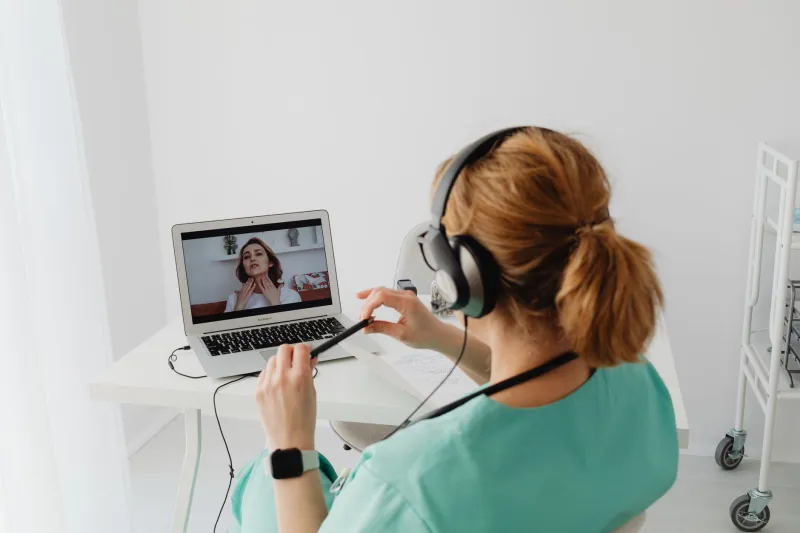
The expansion of telehealth infrastructure, accelerated dramatically by the COVID-19 pandemic and supported by subsequent regulatory flexibility, has begun to alter this landscape in meaningful ways. Virtual consultations now allow rural patients to access neurologists, pain specialists, and other relevant clinicians without leaving their communities. For patients whose primary barrier is geographic, this development is genuinely transformative.
Telehealth platforms have made it possible for a patient in a rural county in Mississippi or Wyoming to describe their symptoms to a specialist in a major medical center, receive a structured clinical assessment, and—where appropriate—be initiated on evidence-based pharmacological treatment without enduring a day-long round trip. Medications such as pregabalin, which carries FDA approval for the management of several neuropathic pain conditions including diabetic peripheral neuropathy and postherpetic neuralgia, can be prescribed through these remote channels and delivered directly to a patient's home through legitimate online pharmacy services.
This model of care does not replace the value of in-person evaluation entirely. Nerve conduction studies and certain physical assessments still require physical presence. However, for the substantial portion of rural patients who would otherwise receive no specialist input at all, a high-quality virtual consultation represents an enormous improvement over the status quo.
What Needs to Change at the System Level
Telehealth alone cannot resolve a problem rooted in structural underinvestment. Sustainable improvement in rural neuropathic pain diagnosis requires parallel efforts on multiple fronts: broader training of primary care physicians in neuropathy screening protocols, expanded reimbursement for telehealth services across all payer types including Medicare and Medicaid, and continued investment in rural healthcare workforce development.
Patient advocacy also has a role to play. Rural patients who suspect they may be living with undiagnosed nerve pain are increasingly empowered to seek second opinions through virtual platforms, to request specific diagnostic workups by name, and to access educational resources that help them describe their symptoms with clinical precision. Organizations focused on neuropathic pain awareness have been working to extend their outreach into underserved communities, providing information that can help patients navigate systems that were not designed with their circumstances in mind.
A Condition That Deserves Better
Neuropathic pain is not a minor inconvenience. For those living with it unmanaged, it is a daily, often hourly, disruption that reshapes every dimension of life—professional, social, and personal. The fact that geography continues to determine whether an American patient receives a timely, accurate diagnosis for a treatable condition is not an acceptable outcome.
The tools to do better exist. Effective medications are available. Telehealth infrastructure, while still maturing, is increasingly capable of connecting rural patients to the expertise they need. What remains is the collective will to ensure that the accident of zip code no longer functions as a barrier to relief.